Workload-led design
Start with your model, data and target performance. Shape the compute architecture around training throughput, inference latency and deployment requirements.

Future Watt / AI Infrastructure
Power infrastructure for the next generation of AI data centers.
Choose your architecture
Compare accelerator families, then work with our team to define the system, site requirements and commercial proposal.
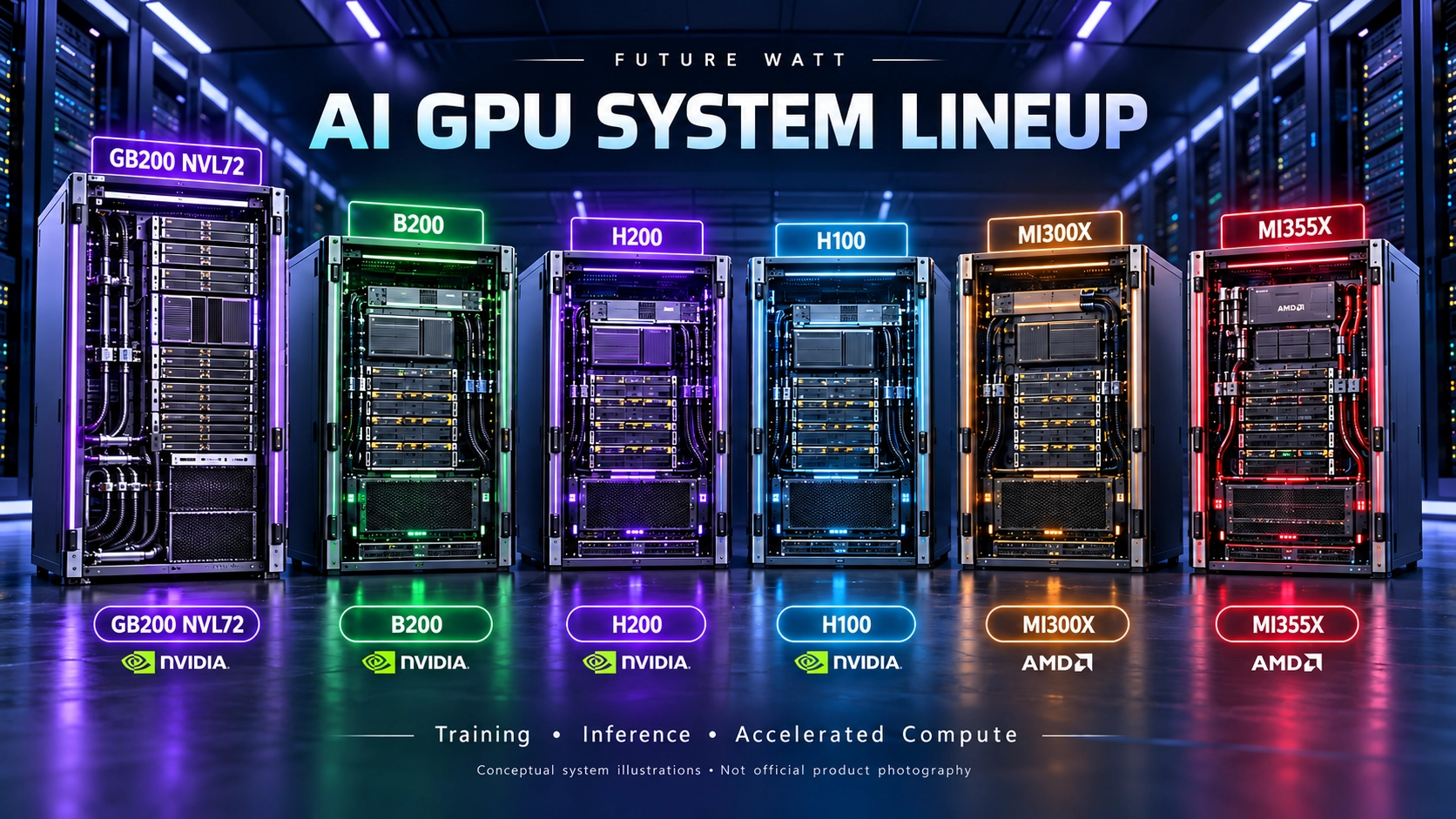
Hardware comparison · All six models
Explore memory capacity, bandwidth and architecture across all six accelerator options. Choose a GPU model from the navigation menu to view its introduction and highlight its specifications.
Swipe horizontally to compare all six models →
| Specification | NVIDIA GB200 NVL72 · Blackwell GPU | NVIDIA B200 SXM · HGX reference | NVIDIA H200 SXM · HGX reference | NVIDIA H100 SXM · HGX reference | AMD MI300X OAM accelerator | AMD MI355X OAM accelerator |
|---|---|---|---|---|---|---|
| GPU architecture | Blackwell | Blackwell | Hopper | Hopper | CDNA 3 | CDNA 4 |
| Memory type | HBM3E | HBM3E | HBM3E | HBM3 | HBM3 | HBM3E |
| Memory per GPU | Approx. 186 GB¹ | 180 GB | 141 GB | 80 GB | 192 GB | 288 GB |
| Memory bandwidth per GPU | 8 TB/s¹ | Up to 8 TB/s | 4.8 TB/s | 3.35 TB/s | 5.3 TB/s | 8 TB/s |
| GPU interconnect | NVLink | NVLink | NVLink | NVLink | Infinity Fabric | Infinity Fabric |
| Reference configuration | NVL72: 72 GPUs + 36 Grace CPUs | HGX: 8 SXM GPUs | HGX: 8 SXM GPUs | HGX: 8 SXM GPUs | OAM module | OAM module |
¹ GB200 values describe one Blackwell GPU within GB200 NVL72, derived from NVIDIA’s two-GPU Superchip specification of 372 GB HBM3E and 16 TB/s. B200, H200 and H100 values use the listed HGX SXM configurations. AMD figures are per OAM accelerator. Bandwidth figures are manufacturer-rated peaks.
GB200 NVL72 is a complete 72-GPU rack with approximately 13.4 TB of GPU memory and 576 TB/s aggregate memory bandwidth. The per-GPU rows above use a common comparison basis; whole-rack totals should be assessed separately from single-GPU or 8-GPU configurations. Application performance depends on the model, precision, software and deployment.
Official specifications: NVIDIA GB200 NVL72 ↗NVIDIA HGX ↗AMD MI300X ↗AMD MI355X ↗
Configuration planning
Evaluate a Hopper-based configuration for model development, fine-tuning and production inference.

Conceptual functional architecture · Not an official physical teardown. Official source references ↗
Configuration planning
Explore a configuration for workloads where model weights, context length and working data influence GPU memory needs.

Conceptual functional architecture · Not an official physical teardown. Official source references ↗
Configuration planning
Assess a Blackwell-based system for demanding training and inference, alongside the power, cooling and network design it requires.

Conceptual functional architecture · Not an official physical teardown. Official source references ↗
Grace Blackwell · Rack-scale AI
The NVIDIA GB200 NVL72 combines 36 Grace CPUs and 72 Blackwell GPUs in a liquid-cooled rack, connected through a single fifth-generation NVLink domain. With approximately 13.4 TB of HBM3E GPU memory, 576 TB/s of aggregate memory bandwidth and around 130 TB/s of aggregate NVLink bandwidth, it is designed for large language model training, advanced inference and high-density AI infrastructure.

Conceptual functional architecture · Not an official physical teardown. Official source references ↗
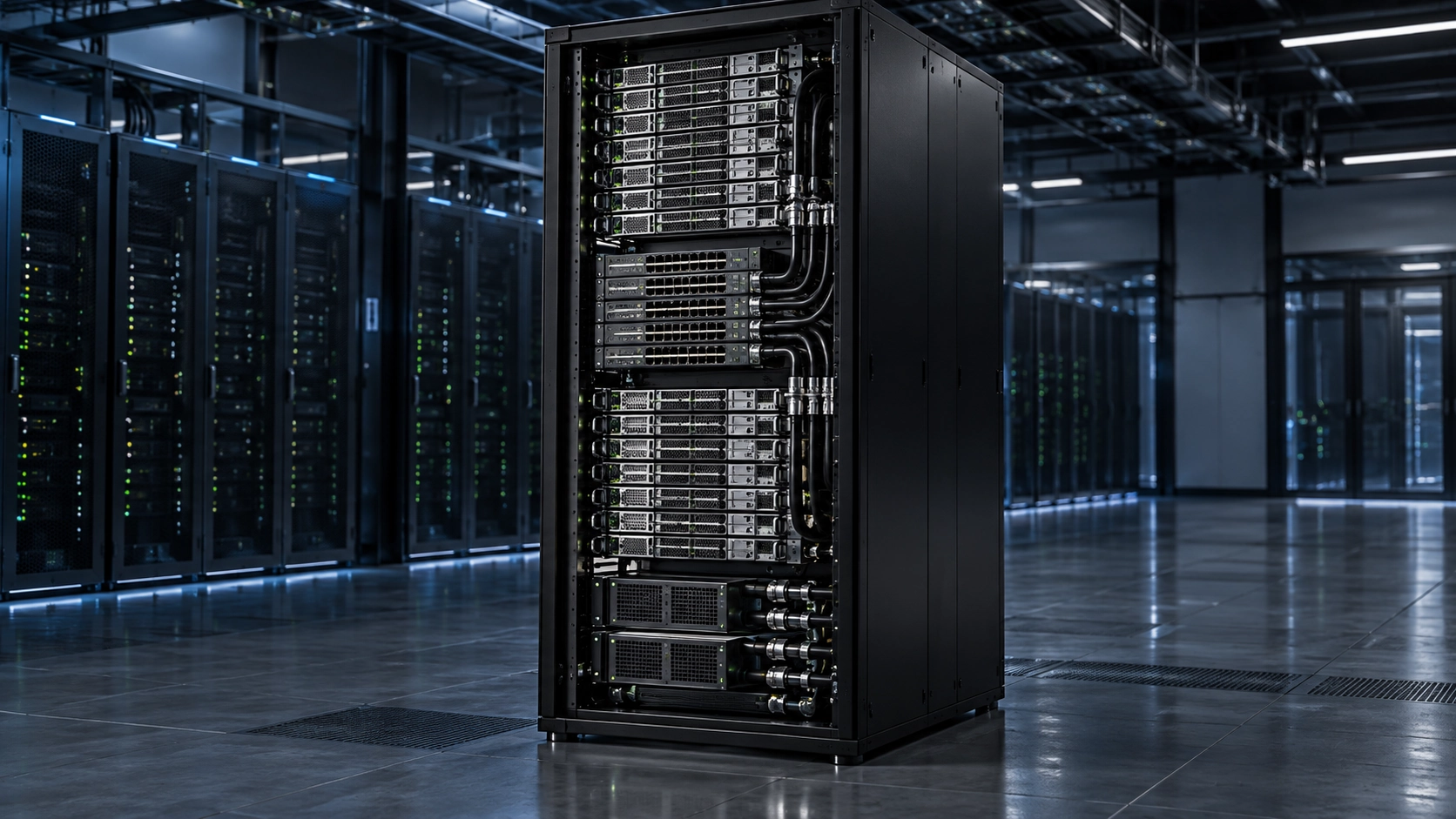
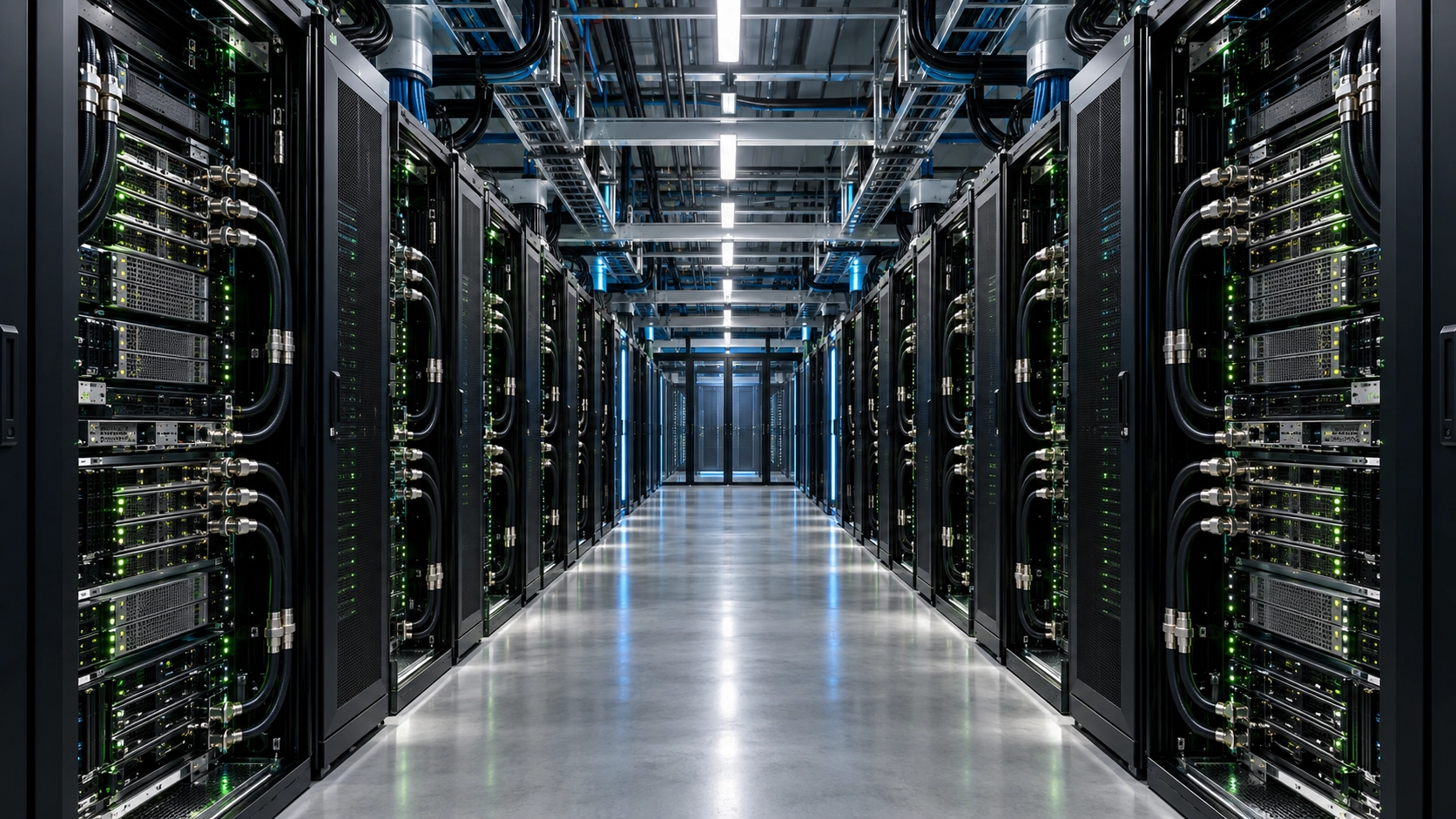
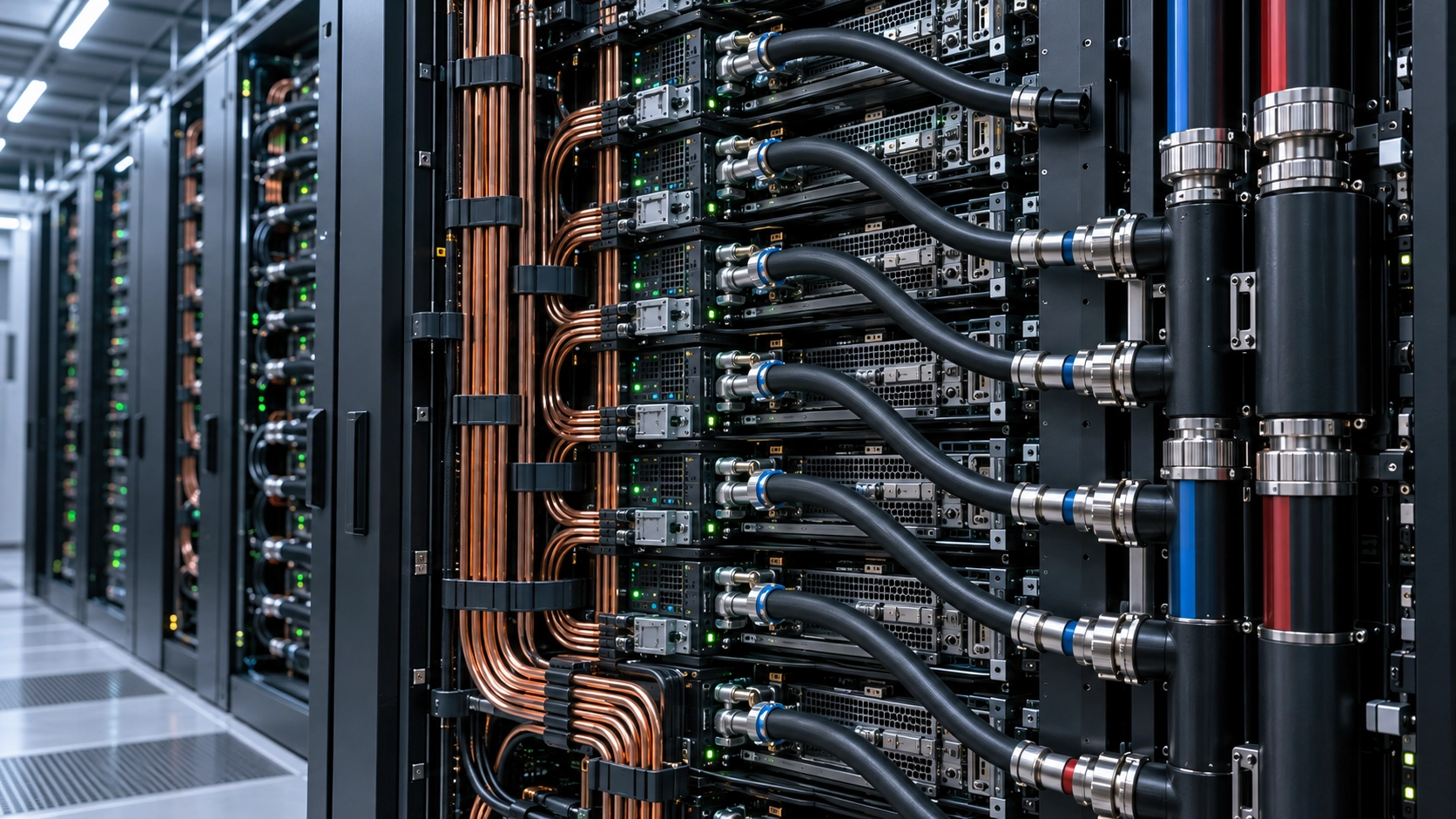
AI-generated concept illustrations · Not official product photography
Configuration planning
Discuss AMD MI300X configurations for your AI workloads, with compute, memory, networking and site requirements defined together.

Conceptual functional architecture · Not an official physical teardown. Official source references ↗
Configuration planning
Discuss AMD MI355X configurations for your AI workloads, with compute, memory, networking and site requirements defined together.

Conceptual functional architecture · Not an official physical teardown. Official source references ↗
Also exploring NVIDIA GB200 or AMD MI300X / MI355X? Discuss your preferred architecture ↗
From requirements to deployment
Connect workload decisions with the network, operating environment and infrastructure behind them.
Start with your model, data and target performance. Shape the compute architecture around training throughput, inference latency and deployment requirements.
Plan the fabric, storage access and data movement together. Evaluate interconnect requirements before expanding a distributed workload.
Coordinate compute requirements with the energy, storage and data center planning that supports a sustainable deployment.
Define tenant isolation, access permissions and private connectivity around your data and operating requirements.
Agree the utilization, performance and cost metrics that matter to your team, and use them to guide capacity decisions.
Set responsibilities, escalation paths and service expectations with the infrastructure team before deployment.
AI applications
Build a deployment plan for language, vision and multimodal models, from initial experiments to larger training runs.
Balance response times, model memory and request volume for reasoning, search and AI applications.
Explore compute for computer vision, scientific research and analysis of large data sets.
Plan recurring model updates and serving capacity for personalized experiences.
Use machine learning to identify unusual patterns in equipment and operational data.
Evaluate simulation workloads for energy networks, industrial processes and complex physical systems.
Your questions, answered
Tell us what you are building. We will help turn the requirements into a practical infrastructure discussion.
Speak with FutureWatt ↗Explore the NVIDIA families above, or ask about the existing GB200 and AMD options. A proposal confirms available hardware and delivery timing.
Yes. Share your model size, data volume, throughput and latency targets so the team can scope a configuration.
They are sized with the workload, including data ingestion, checkpointing and distributed compute requirements.
Agree access controls, isolation, connectivity and compliance requirements before deployment.
Discuss your frameworks, containers and operating environment during technical scoping.
Contact FutureWatt with your capacity and timeline. Pricing, availability and service terms are confirmed in the proposal.
Start the conversation
Share your workload, preferred GPU architecture, required capacity and deployment timeline.
Plan your AI infrastructure